


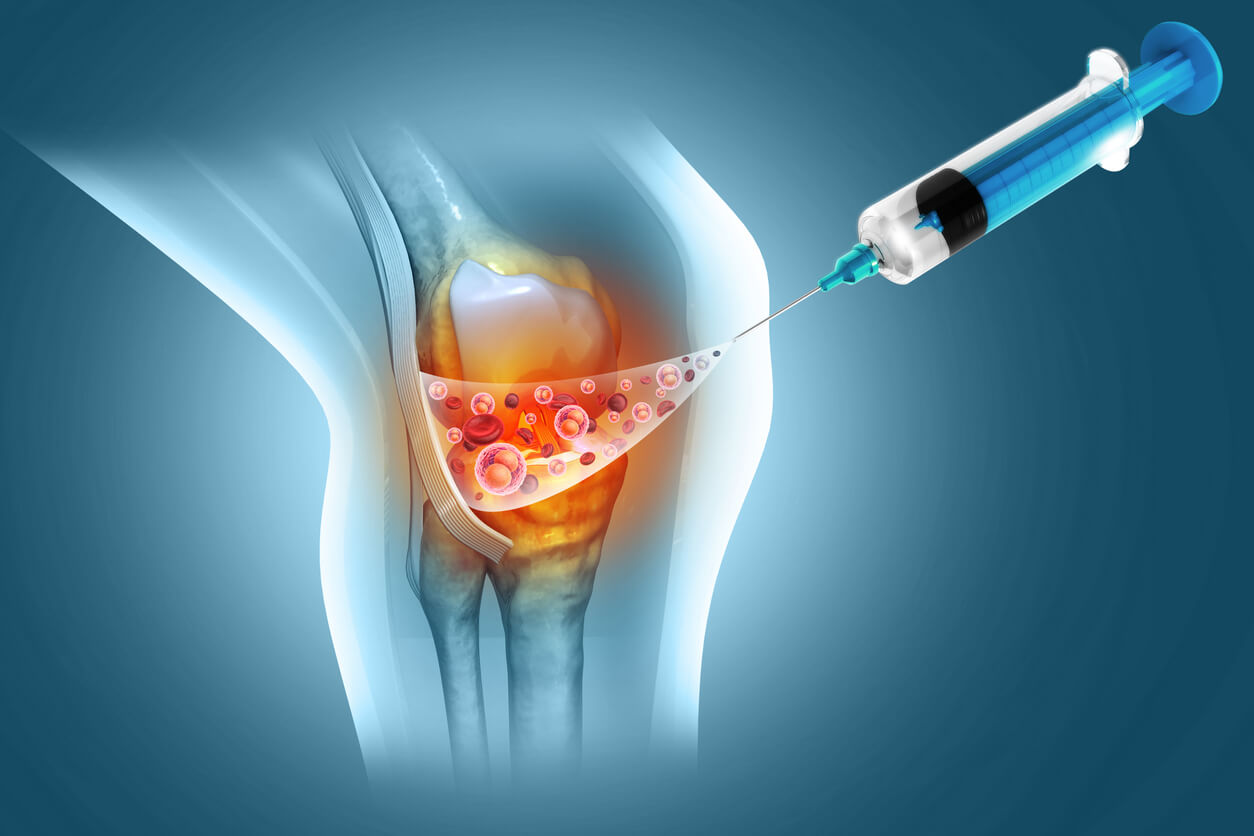
For long-term chronic knee pain relief, PRP treatments near you tend to outperform cortisone injections, particularly three to six months after treatment. Cortisone may work faster initially, but growing research links repeated corticosteroid use to accelerated joint damage, making PRP a more sustainable option for many patients.
In short:
- PRP outlasts cortisone. PRP therapy for chronic knee pain typically delivers six to 12 months of relief, compared to the shorter-term effects of cortisone injections.
- Cortisone carries structural risks. A single corticosteroid injection has been shown to accelerate cartilage breakdown and joint deterioration over time.
- PRP success rates are encouraging. Mayo Clinic reports a 60% to 70% success rate with PRP injections.
Chronic knee pain can make even the simplest daily activities feel like significant challenges. For the roughly 33 million U.S. adults living with osteoarthritis, according to the Centers for Disease Control and Prevention (CDC), finding lasting pain relief without doing further harm to the joint is a real and pressing concern.
Two of the most commonly recommended injection-based treatments are platelet-rich plasma (PRP) therapy and cortisone shots. Both are delivered directly into the knee. Both promise pain relief. But they work differently, last for different lengths of time, and carry very different risk profiles, especially when used repeatedly.
So, which one is better for chronic knee pain? The research increasingly points to PRP therapy as the stronger long-term option, though the answer depends on where a patient is in their disease progression, their overall health, and what they are trying to achieve. This post breaks down how each treatment works, what the evidence says, and which patients tend to benefit most from each approach.
What Is PRP Therapy — and How Does It Work for Knee Pain?
Platelet-rich plasma (PRP) therapy is a regenerative treatment derived from a patient’s own blood. According to the Cleveland Clinic, a PRP injection contains 5 to 10 times the concentration of platelets found in a normal blood sample.
The process involves three steps:
- Drawing the patient’s blood
- Placing it into a centrifuge machine that spins and separates the blood components by weight
- Injecting the concentrated platelet-rich plasma directly into the affected joint
The entire procedure takes approximately one hour.
Platelets contain growth factors — specialized proteins that play a central role in tissue repair. When injected into a damaged knee joint, PRP therapy is believed to work by:
- Triggering short-term inflammation that jump-starts the healing process
- Stimulating collagen production to rebuild tissue
- Encouraging cellular turnover
- Reducing long-term inflammation that drives chronic pain
How Are PRP Treatments Near Me Different from a Cortisone Shot?
Cortisone shots, also called corticosteroid injections, contain a synthetic steroid medicine combined with a local anesthetic. The steroid suppresses inflammation in the joint, which reduces pain and swelling, often within days of the injection.
PRP therapy, by contrast, works with the body’s natural healing mechanisms rather than suppressing them. This distinction matters significantly for long-term outcomes. Cortisone acts quickly but does not repair damaged tissue. PRP works more gradually but targets the underlying structural problem.
What Are the Benefits of PRP Treatments Near Me for Chronic Knee Pain?
PRP therapy for chronic knee pain offers several clinically meaningful advantages over other injection options.
- Duration of relief. Many patients with knee osteoarthritis report six to 12 months of pain relief following PRP treatment — a longer window than what cortisone typically provides.
- Minimal side effects. PRP injections carry very few risks, largely because the treatment uses the patient’s own blood. Some temporary swelling and discomfort at the injection site are common for one to two days after treatment, but serious adverse events are rare.
- Structural benefits. Unlike cortisone, which suppresses inflammation without repairing the underlying damage, PRP is designed to promote tissue regeneration and slow joint deterioration over time.
What Are the Risks and Limits of Cortisone Injections?
Cortisone injections have been used for decades to treat knee pain from osteoarthritis, rheumatoid arthritis, bursitis, and tendinitis. They remain a widely used option in clinical practice. However, there is a notable list of potential side effects that patients and providers should carefully weigh.
Side effects of cortisone shots can include:
- Cartilage damage
- Death of nearby bone
- Joint infection
- Nerve damage
- Tendon weakening or rupture
- Thinning of nearby bone (osteoporosis)
- Short-term increase in blood sugar
- Short-term flare of pain, swelling, and irritation
- Thinning of skin and soft tissue at the injection site
Because of the risk of cartilage damage with repeated use, healthcare professionals typically limit the number of cortisone injections delivered into any single joint. For patients with chronic knee pain requiring ongoing treatment, this limitation is a significant practical drawback.
Who Is a Better Candidate for PRP vs. Cortisone?
Not every patient is the right fit for PRP treatments near them, and cortisone still plays a legitimate role in certain clinical scenarios. Understanding the distinction helps patients have more informed conversations with their providers.
PRP therapy for chronic knee pain tends to be most effective for patients who:
- Have mild to moderate knee osteoarthritis with some remaining cartilage
- Are looking for longer-lasting relief without repeated injections
- Have not responded well to cortisone or other conservative treatments
- Want to avoid the structural risks associated with repeated steroid use
Cortisone injections may be more appropriate for patients who:
- Need rapid, short-term pain control — for example, before a major event or procedure
- Are in the early stages of treatment and need immediate symptom relief
- Are not yet candidates for more advanced interventions
- Have contraindications to PRP treatments near them, such as certain blood conditions or medications
It is worth noting that PRP therapy is relatively more expensive than cortisone and may not be covered by insurance for all patients. Providers often recommend weighing the short-term cost against the potential long-term benefit of avoiding structural damage and repeated injections.
Frequently Asked Questions (FAQ)
Here are some of our most frequently asked questions about booking our PRP treatments near you for chronic knee pain.
How many PRP injections are needed for chronic knee pain?
The number of PRP injections varies by patient and condition severity. Some individuals experience significant improvement after a single injection, while others benefit from a series of treatments.
A provider can recommend a plan based on the extent of joint damage and how the patient responds to the initial treatment.
How long does it take to feel results from a PRP injection for knee pain?
Most patients begin to notice improvement within two to six weeks of a PRP injection. The full therapeutic benefit, including reduced pain and improved joint function, may take several months to develop as the body’s healing process progresses.
Are PRP injections painful?
The PRP injection process typically involves mild to moderate discomfort. Some temporary swelling and soreness at the injection site are common in the one to two days following the procedure, as the body initiates its inflammatory healing response.
Most patients tolerate the treatment well, with no serious adverse events reported in large clinical series.
What is the difference between PRP and hyaluronic acid injections for knee pain?
Both PRP and hyaluronic acid (HA) injections are alternatives to cortisone for knee osteoarthritis. Hyaluronic acid acts as a lubricant in the joint, while PRP focuses on stimulating tissue repair through growth factors.
Explore PRP Treatments in Little Rock, Arkansas
If chronic knee pain is affecting your quality of life, Dr. William F. Hefley, Jr. offers comprehensive, patient-centered care designed to address your specific needs. Our team is committed to providing evidence-based treatment options, including rehabilitation and regenerative approaches to help patients find meaningful, lasting relief.
Do not let knee pain limit what you can do. Call the office today at (800) 336-2412 or request an appointment online.

 Read our Blog
 Patient Education